

As a freelance UX designer for Juke, a live music/entertainment tech startup, I had the opportunity to design and develop a new website, juke.live, in WordPress. Juke monetizes fan engagement and captures valuable audience data through interactive experiences. They wanted a new website to display their mission and storyline more effectively, as well as to better connect artists with fans.
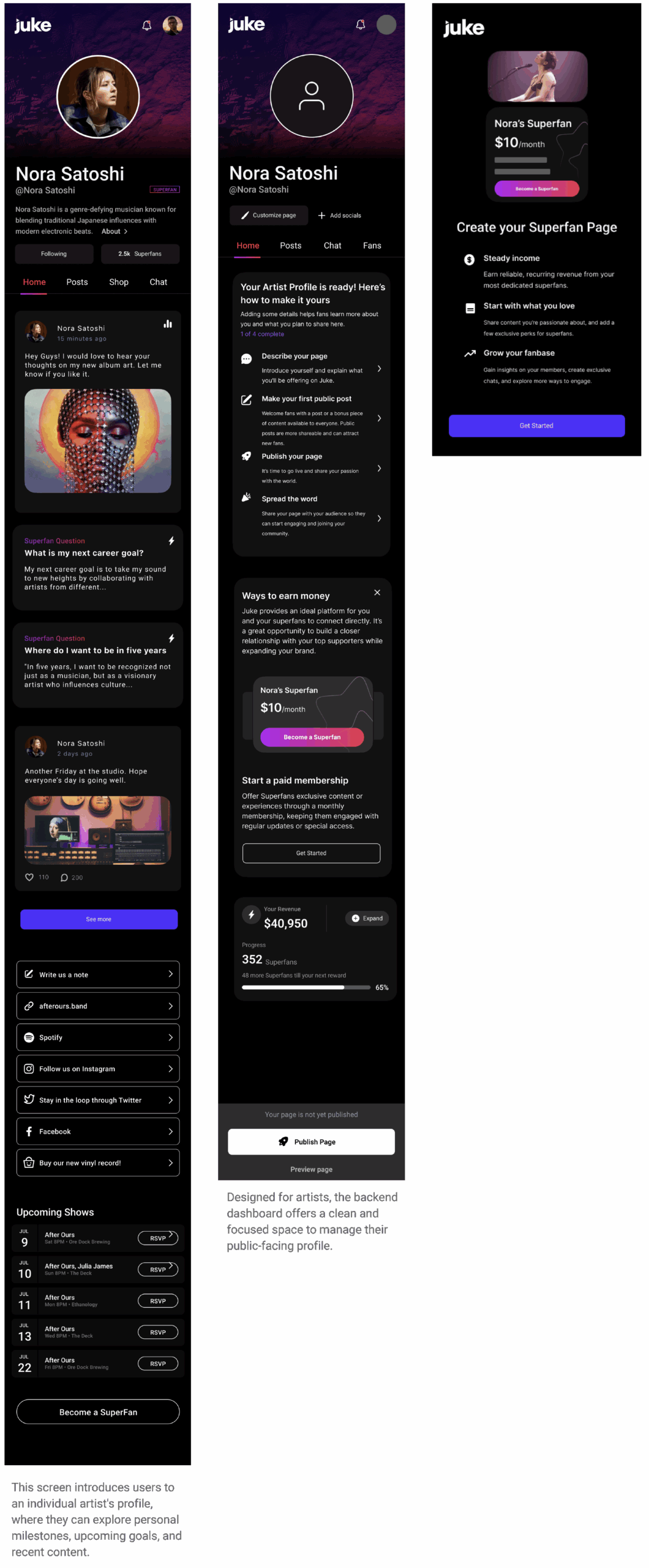
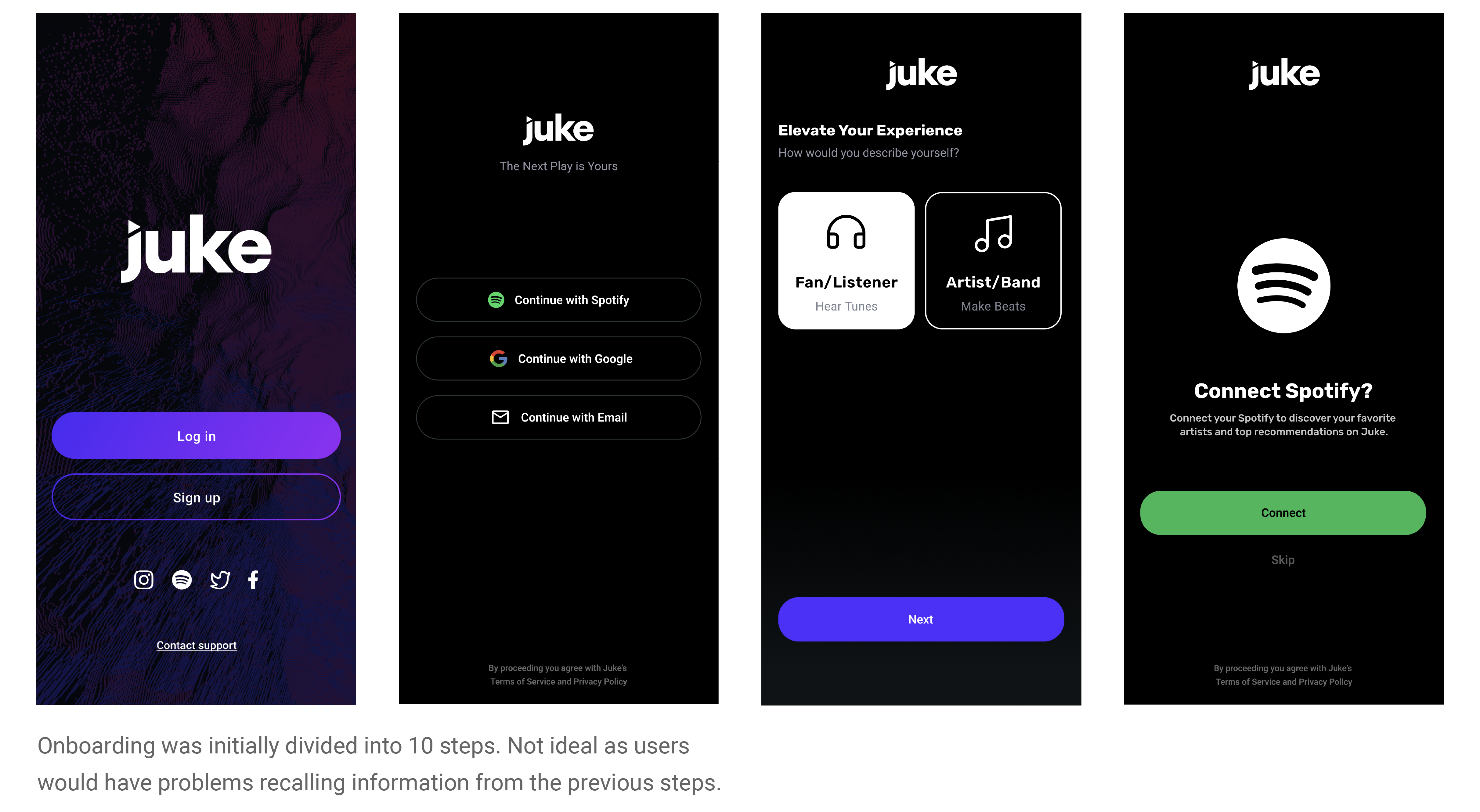
In addition, within this project, I also led the development of Juke’s “Superfan” feature (as seen in juke.band) as the sole designer, creating user flows and high-fidelity prototypes that let fans subscribe to artists for exclusive content and milestones. In the end, we aimed to design the fan and artist dashboard experience (including onboarding and subscriptions) and deliver a community-facing feature that helps artists promote their exclusive content and connect with fans.
MY ROLE
UX Designer
CLIENT
Juke
TIMELINE
3 months, remote (2024)
TOOLS
WordPress, Figma, Miro, Trello, Zoom, Slack, Illustrator.
TEAM
1 Designer, 1 CEO, 1 Software Developer
OVERVIEW
Research Plan
Research allows me to deeply understand users. Not only their immediate frustrations, but also their motivations, behaviors, and goals. It helps lays the groundwork for designing effective solutions that resonate with both users and business objectives.
To ensure the research was focused and informed the website redesign effectively, I first created a research plan, outlining goals, key questions, assumptions, methodologies, participants, and timeline.
Research Goals
- Understand how live music professionals and fans engage with music-tech platforms.
- Identify what information fans and artists need most when visiting a live music platform’s website.
- Explore competitor approaches to communicating interactive fan experiences.
- Discover what keeps fans engaged and what barriers prevent artists from adopting new tools.
Methodologies
-
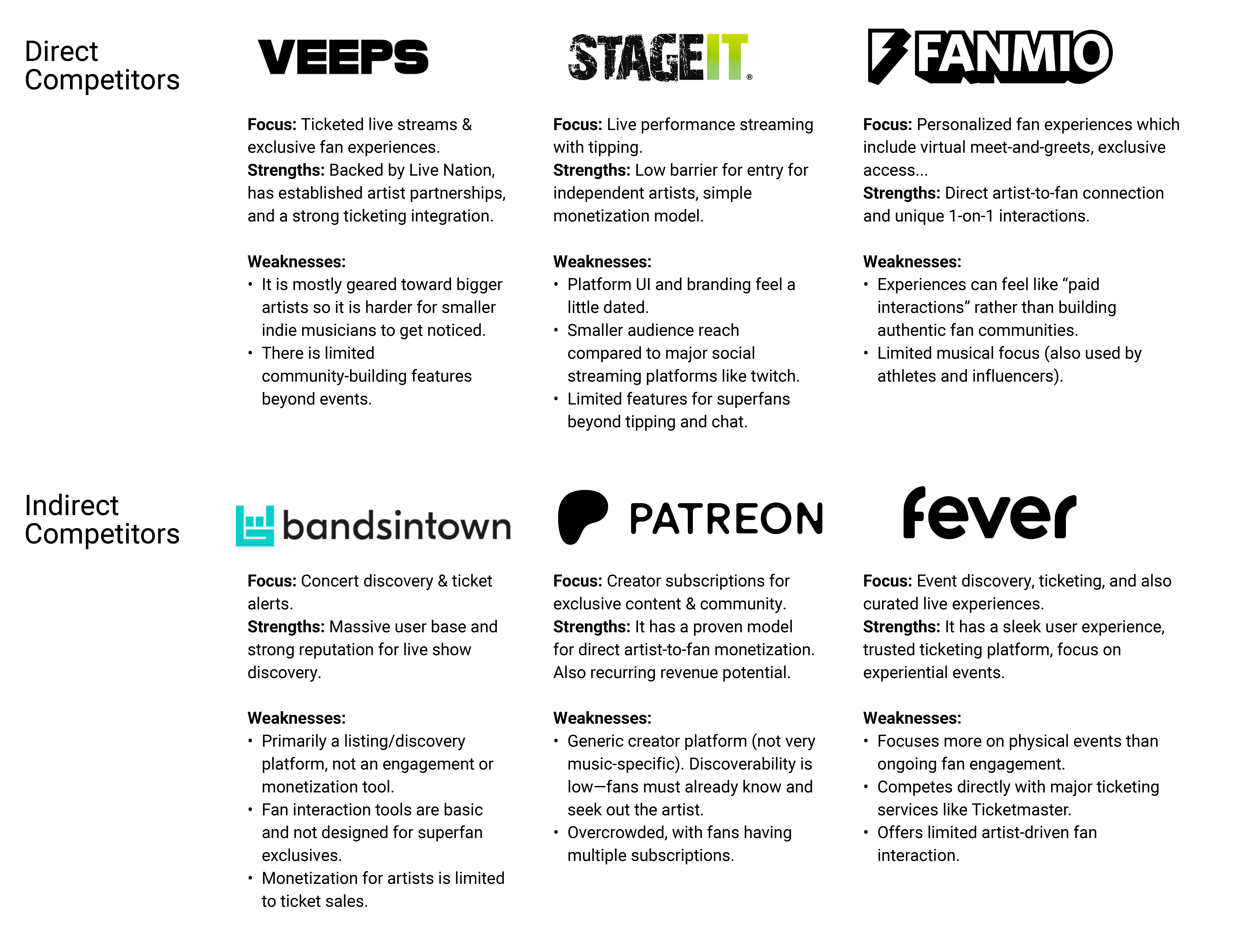
Competitive Analysis: Studied four music-tech platforms, focusing on their strengths, weaknesses, and feature positioning.
-
User Interviews: Conducted 10 interviews, including fans and artists, to understand how they discover and evaluate engagement platforms.
- Heuristic Evaluation: Reviewed Juke’s original site to find usability and clarity issues.
RESEARCH
Competitive Analysis
I decided to conduct a competitive analysis on companies pioneering in the live music engagement platform market, as their solutions to similar problems can provide insights into their strengths and weaknesses. These insights also help identify gaps in features that Juke could address. Here are several direct competitors, which focus on solving the same problem as Juke, as well as three indirect competitors.
VALIDATING OUR ASSUMPTIONS
Semi Structured Interviews
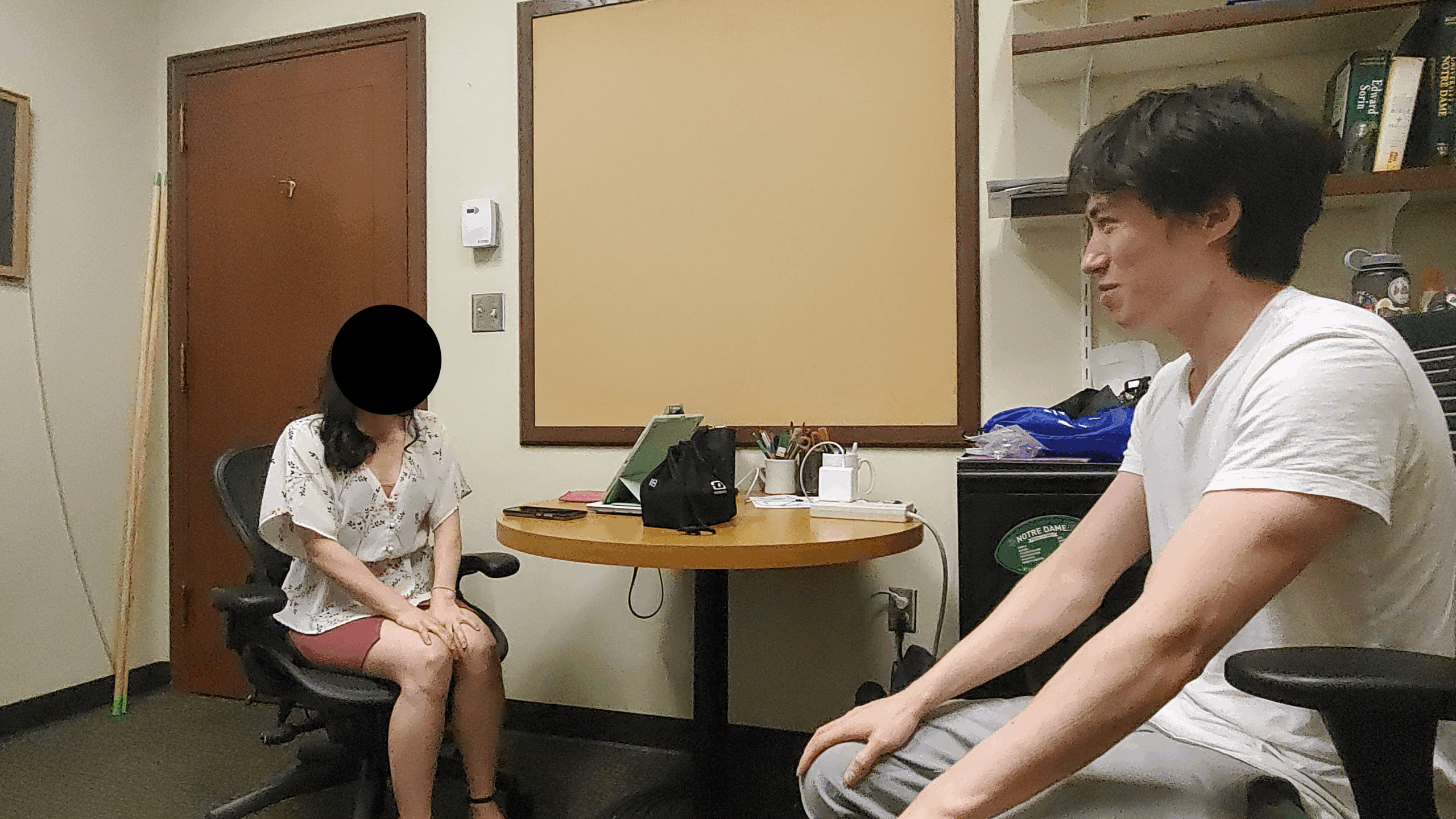
I conducted ten semi-structured interviews to understand how they discover and evaluate engagement platforms, their motivations, and the challenges they face.
CONSOLIDATING LEARNINGS
Affinity Diagram
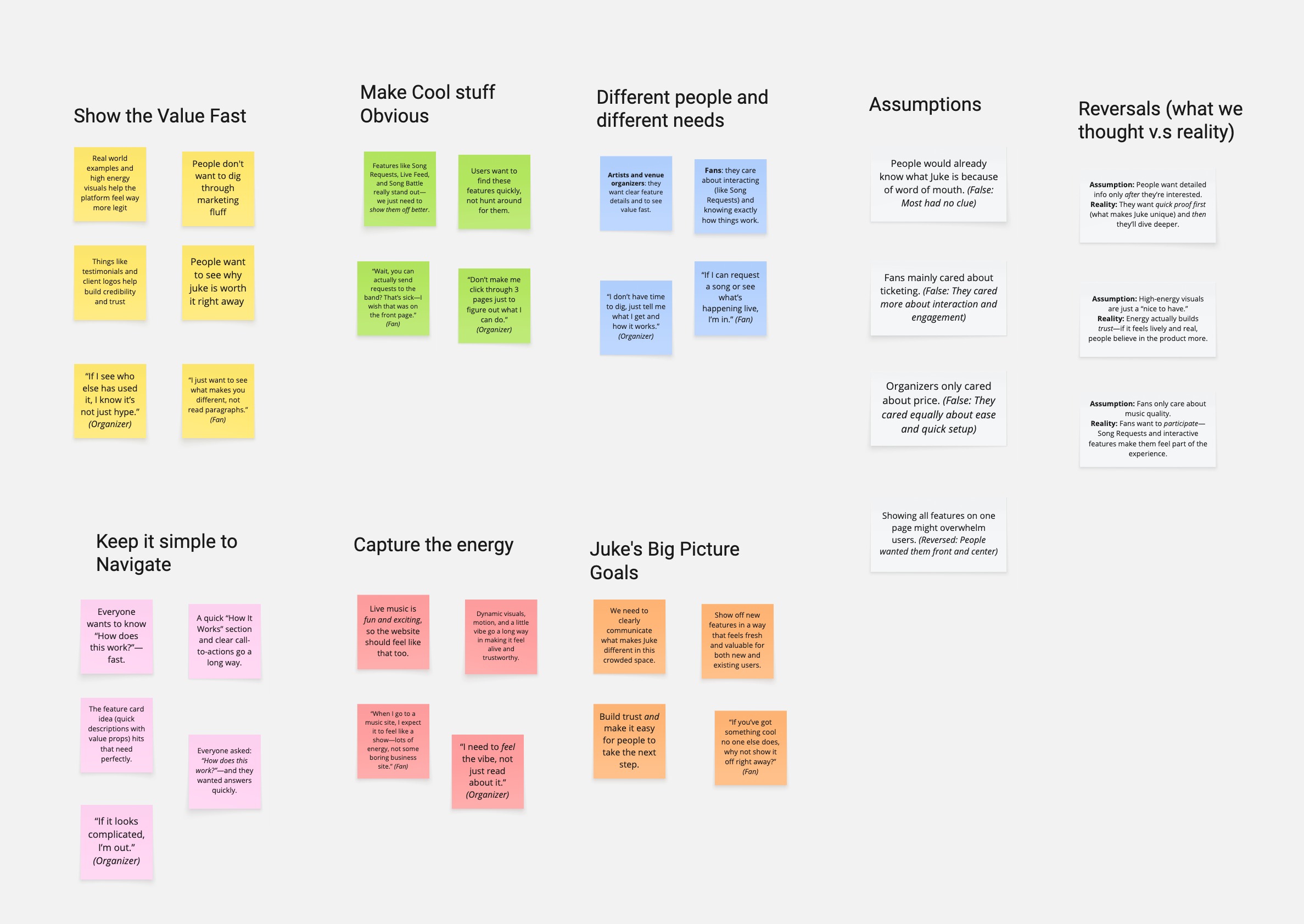
After conducting interviews, I gathered themes and insights that I could apply to refine user flows and prioritize features that aligned with user needs.
RESEARCH
Insights
- Show the value fast: Artists and organizers don’t want fluff—just prove why Juke’s worth it.
- Make it feel alive: Sites with energy and real examples feel way more trustworthy.
- Show off the cool features: Features like Song Requests and Live Feed need to be front and center.
- Keep it simple: Clear “How It Works” steps and easy buttons get people to take action.
- Keep it personal: Fans want genuine connections and feel more engaged when artists share real stories and moments.
RESEARCH
Pain Points
- Fans often struggle to find authentic ways to engage with their favorite artists beyond attending shows or following social media, which can feel impersonal and one-sided.
- Artists lack accessible tools to build sustainable, direct relationships with superfans without relying on big-ticket events or expensive marketing efforts.
- Current platforms focus heavily on ticketing or content delivery but fall short in creating interactive, community-driven spaces that keep fans engaged over time.
DEFINING A NEW PRODUCT FEATURE
The Diverse Users of Juke
Framing problem statements for our different end-users and their journeys.
Based on initial user research, we knew we wanted to create something that could connect artists and fans on a deeper level. We needed to consider not only our direct customers (the artists), but also their fans as end-users. Each have distinct challenges and needs.
Artists
Artists face the challenge of building meaningful, ongoing connections with their fans but often lack simple, effective tools to promote exclusive content and manage subscriptions.
Fans
Fans want to connect more deeply with their favorite artists but feel disconnected due to unclear access to exclusive content and uncertainty about subscription benefits.
This naturally led to two related but distinct objectives for our ideation phase:
RESEARCH
How Might We
How might we empower artists to easily create and share exclusive experiences that drive fan engagement and subscriptions?
How might we provide fans with a trustworthy, simple way to connect, subscribe, and access exclusive artist content?
OVERVIEW
Bringing Live Entertainment Energy to Juke’s Homepage
We first set out to create a homepage design. The homepage redesign for Juke posed a unique challenge: how to quickly capture the energy of live entertainment while guiding users through the platform’s key offerings. Given the timeline, we prioritized sections and high-impact features that would resonate with new and returning users.
From there, we mapped out a user-friendly flow that included a “How It Works” section, highlights of key features, and testimonials to build credibility. We also included a dedicated area for past clients and partners to reinforce Juke’s growing presence in the live entertainment space.
Throughout the UX phase, I created wireframes, seen below, that were modified and iterated on.

OVERVIEW
Following a Design System
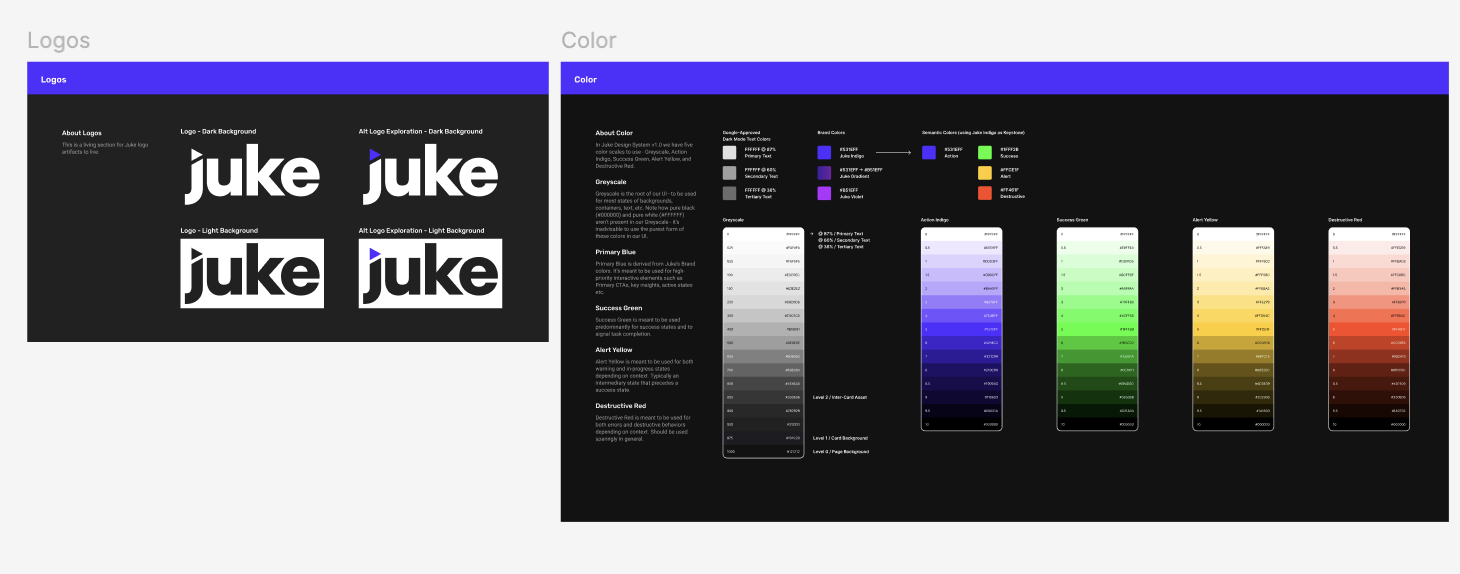
As part of the project, we built and maintained a scalable design system in Figma to keep Juke’s platform consistent and cohesive. We created inclusive, accessible components and documented how to use them so future design work could stay on track. The color palette pulled from the vibrancy and energy of live music, pairing bold accent tones with dark, atmospheric backgrounds for contrast. Typography struck a balance between personality and clarity, with headers that grabbed attention and body text that stayed easy to read. Design tokens for colors, typography, and spacing made it simple to apply brand-aligned patterns seamlessly across both current and future product experiences. Below is an example screenshot of the system.
THE PROCESS
Easy Access to Information
A main goal of the project was to help both artists and venue organizers get the information they needed quickly. For organizers, they want to quickly get a sense of how Juke works and what features we offer. To this end, we introduced a feature card component, which includes a brief description of our main value proposition. With this approach, any visitor to the page could get the info they needed right away.

THE PROCESS
Presenting Engaging Services
Moreover, as part of the launch of this redesign, Juke introduced new features to its suite of services. Because this is an important revenue stream, we aimed to create a more robust marketing page to communicate the value of these offerings to both existing and potential customers. The result was a scrolling carousel page featuring compelling imagery and clear descriptions of services such as Song Requests, Live Feed, and Song Battle.
INTRODUCING
Superfans
A way to enable artists to share exclusive content and milestones, giving fans closer access and new ways to support.
THE PROCESS
Designing Deeper Connections Between Artists and Fans
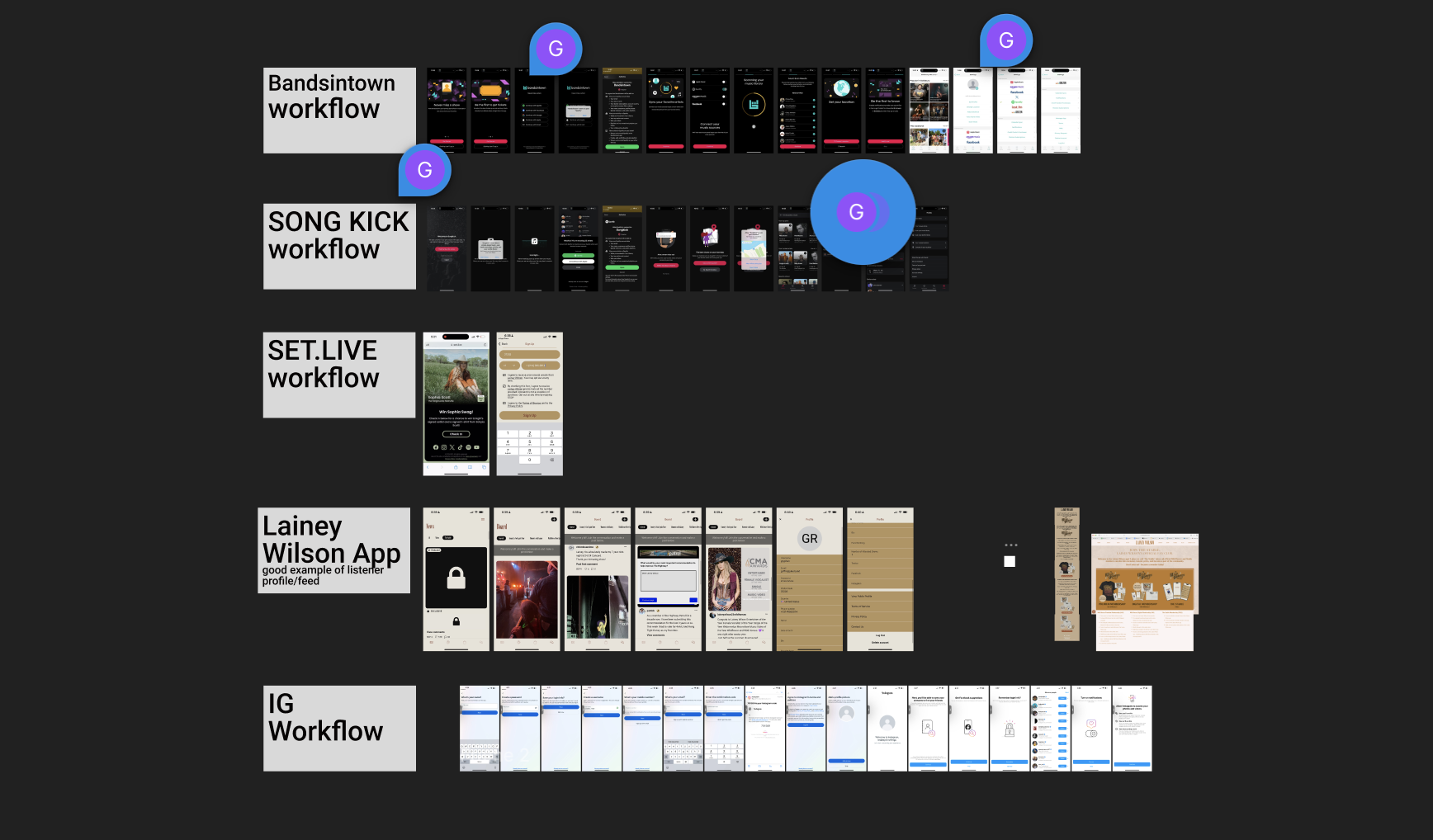
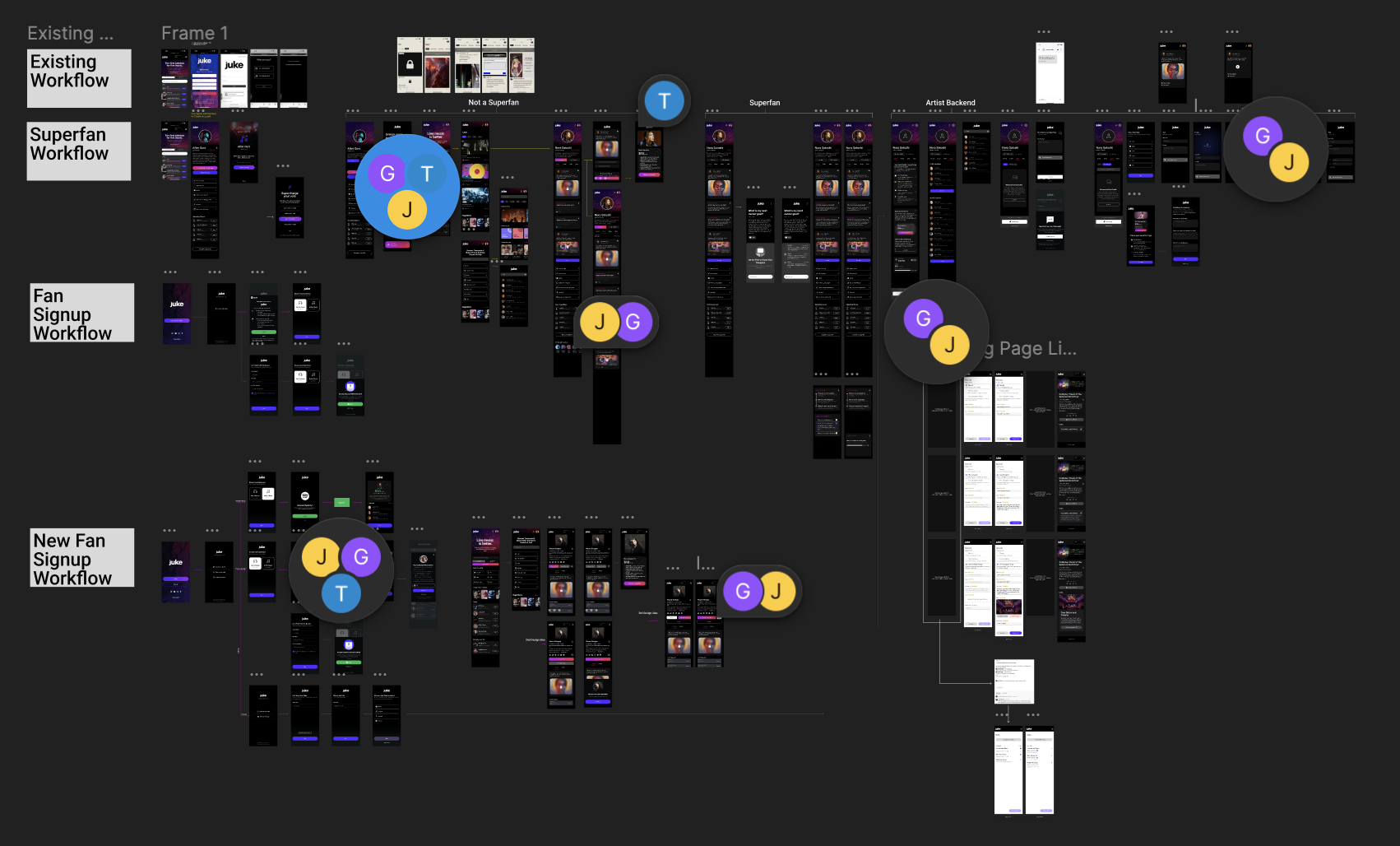
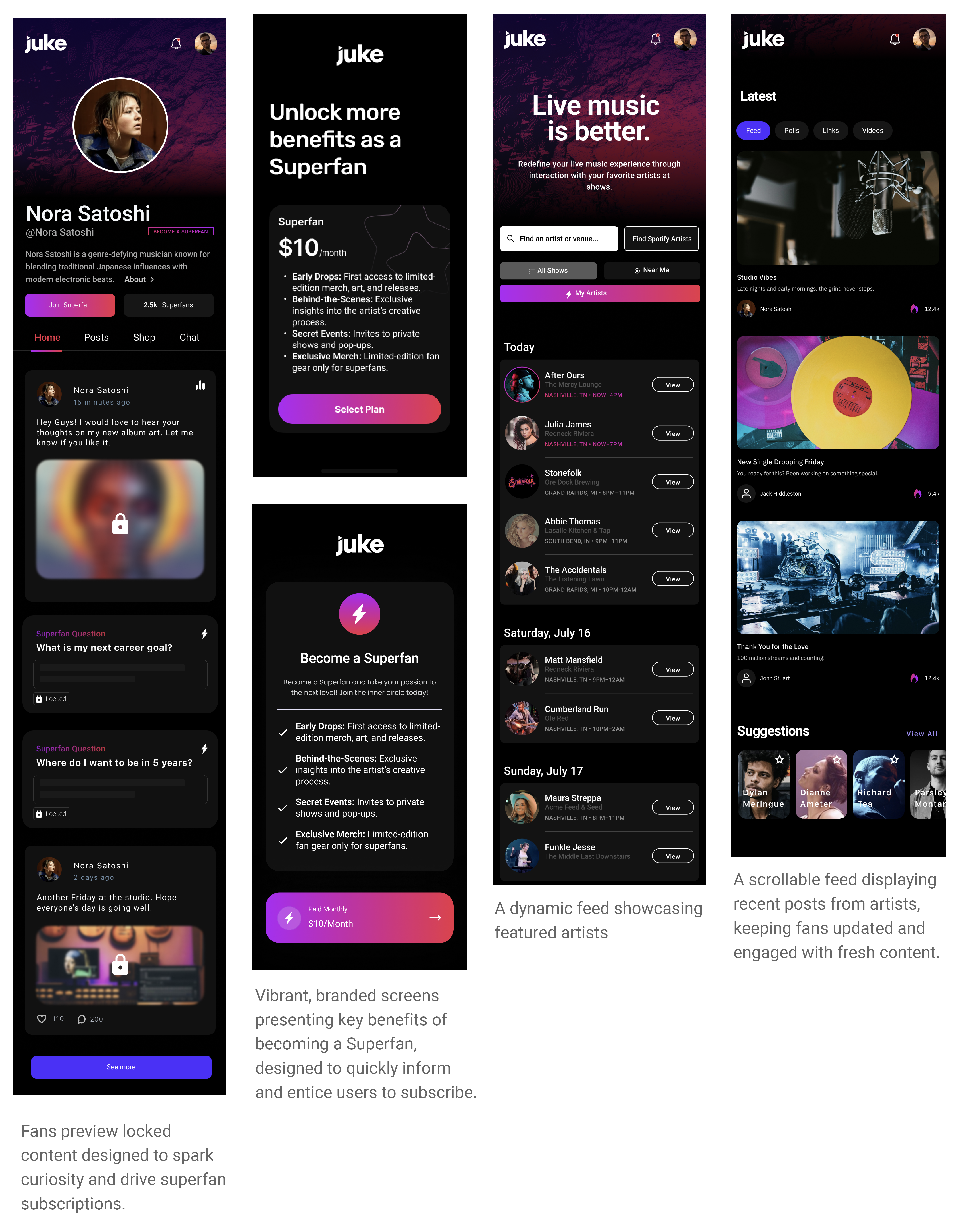
In addition to our homepage, which showcases what Juke is and its key offerings, this “Superfan” feature was created as a way to involve fans more directly. We wanted to build a seamless, engaging experience that connects artists closely with their most dedicated fans. To do this, we studied existing workflows from platforms like Bandsintown and Songkick to learn how they drive fan engagement. Using these insights, we developed a tailored approach that makes it easy for artists to share exclusive content and for fans to subscribe, support, and feel truly connected—bridging the gap between live performances and personal connections. Below are mockups that I designed. I then collaborated with a developer for further adjustments. The handoff process often involved sharing detailed design specs via Figma and conducting weekly meetups to ensure smooth implementation, gather feedback, and make iterative updates.
FINAL OUTCOMES
A clean and responsive website, juke.live, showcasing Juke’s offerings. It was developed alongside a fully customizable Superfan feature that enables artists to share exclusive content and milestones while providing fans with a reliable way to subscribe and support their favorite artists.


REFLECTION
The site successfully launched and can be seen at juke.live. However, the superfan feature is still in development. I believe this project highlighted the value of quick yet targeted UX research. The insights directly influenced feature prioritization and content clarity. With limited time, we couldn’t capture long-term metrics post-launch, but the new site established a strong foundation for testing and future optimization. Most importantly, it helped Juke communicate its unique value to artists, fans, and organizers more effectively.
REFLECTION
Takeaways
- Clear communication is key: Building a website from scratch required us to simplify complex service offerings into clear, concise messaging that resonated with different audiences.
- Prioritizing core features: With a tight timeline, focusing on the most impactful sections—like “How It Works” and feature highlights—helped ensure the site launched quickly without sacrificing user experience.
- Iterating with feedback: Regular check-ins with the CEO and developer allowed quick pivots based on feedback, ensuring design decisions aligned with business goals and technical constraints.